Bigger Thomas’s Mother-Son Relationship
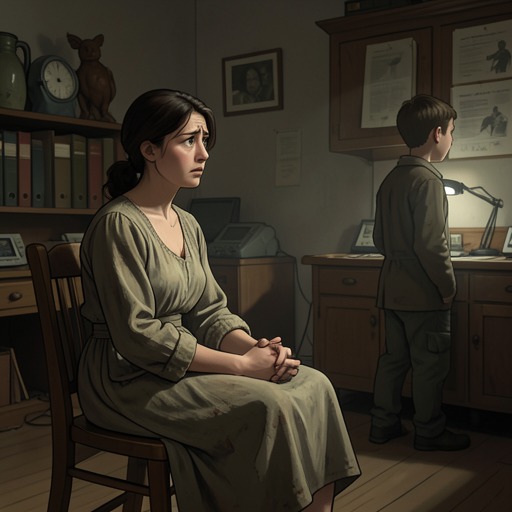
Native SonBigger Thomas’s relationship with Ma is a strained bond of dependence and care, repeatedly caught between her efforts to protect the family from poverty and his effort to keep its suffering from reaching him. Their arguments are not simply clashes of temperament: hunger, overcrowded living conditions, and Bigger’s sense of powerlessness give each exchange its pressure. Ma urges him to work because the family needs food, while Bigger resists the shame and frustration of a life in which even that decision seems forced upon him.
A Household Under Pressure
Ma’s rebukes make the family’s circumstances unmistakable. With Vera ill and the household living in one room, she asks Bigger to imagine what it would mean to wake and find his sister dead, and warns that the rats in their home could endanger them as they sleep. She accuses him of caring only for his own pleasure and reminds him that he delayed accepting relief-sponsored work until the threat of losing food became immediate. Her anger is sharpened by fear: she imagines the family’s hardship continuing while Bigger refuses responsibility.
Ma’s warnings reach beyond the immediate quarrel. She predicts that Bigger will one day regret failing to make something of himself and tells him that the path he is taking with his gang leads to the gallows. He rejects her predictions as unwelcome, but her insistence shows that she regards his choices as bound up with the family’s prospects and his own safety. When she says that the family could manage without him, the remark is both a rebuke and an assertion that they cannot wait indefinitely for him to change.
The scenes also show that Ma’s criticism coexists with practical care. After confronting Bigger, she gives Vera a place to rest and later turns to preparing food for the household. At the table, she asks Bigger whether he will take the job; he answers that he has already promised to do so and complains that she keeps asking. The exchange turns an apparently settled decision into another point of conflict, because Ma needs assurance that the promised work will actually support the family.
Work, Dependence, and Resentment
For Ma, Bigger’s employment is not merely a step toward his individual future. She tells him that if he takes the position with Mr. Dalton, she might arrange a decent place for the children, where they would not have to live in such degrading conditions. Her hope gives the job a family purpose: his wages could alter the household’s living circumstances. Bigger does not engage with that possibility at the table. He asks to be left alone to eat, keeping Ma’s plan at a distance even as he depends on the work she is urging him to accept.
The material stakes become explicit when Ma pushes a quarter toward Bigger’s plate. He pockets it, finishes his coffee, and leaves. As he goes, she reminds him that without the job the relief authorities will cut the family off and they will have no food. He shouts that he has already agreed and slams the door. The quarter and the threatened loss of food make the imbalance within their argument concrete: Ma must manage an immediate household need, while Bigger experiences the demand to meet it as another restriction on his choices.
Outside, Bigger recognizes the narrowness of those choices. He sees that taking the Dalton job means accepting a life he expects to find miserable, while refusing it means hunger for the family. He is maddened by the lack of a wider course of action, but his frustration does not become a plan that could change their conditions. His anger at Ma therefore coexists with dependence on her household and on the decision she has pressed him to make. The conflict is not resolved by his promise to work; it is carried into the next exchange whenever the family’s survival is at stake.
The Wall Between Them
The narration explains why Ma’s concern does not bring Bigger closer to her. He hates his family because he knows they are suffering and feels powerless to help. He fears that fully facing the misery of their lives would overwhelm him with shame and despair, so he maintains an iron reserve, living among them as if separated by a wall or curtain. His distance is not evidence that he fails to see their hardship. It is a way of refusing to feel its full meaning, because he believes that doing so could drive him to destroy himself or someone else.
That inward explanation deepens the force of the family arguments without excusing his hostility. Ma speaks directly about hunger, housing, and the consequences of his choices; Bigger responds with irritation, silence, or departure. He knows what she is asking and why, yet cannot turn that knowledge into a sense of effective agency. His reserve protects him from immediate emotional exposure but also prevents the intimacy Ma’s practical care might otherwise invite.
The relationship thus holds two opposing forms of knowledge. Ma sees the danger in Bigger’s indifference and tries to make him answer for the household’s needs. Bigger sees the family’s suffering, but experiences that awareness as a threat to his ability to endure. Their exchanges recur around food, work, and the possibility of a better home, while the deeper source of their distance remains the conditions neither can simply overcome.
Narrative Significance
The mother-son relationship makes structural poverty visible at the level of daily family life. Ma’s warnings and hopes are attached to specific necessities: a job, food, a room, and the safety of her children. Bigger’s sense of being trapped is equally concrete: the available choice appears to be submission to unwanted work or the loss of the family’s means of survival. The conflict shows how economic dependence turns care into pressure and makes a family’s attempt to secure a future another source of immediate resentment.
The novel’s later treatment of violence against women and the unequal public recognition of their suffering also gives this relationship a wider, carefully qualified context. In the inquest, Bigger understands that Bessie’s death is being used as evidence against him while the public response centers on Mary’s death; he also recognizes that Bessie would resent having her body used in that way. Separately, later feminist criticism of Wright’s fiction identified its hostility toward women, especially Black women. These contexts do not erase the particular care and conflict between Ma and Bigger, but they place their household within a narrative in which Black women’s hardship and claims can be subordinated to the crises of others. Ma’s insistence that her son face the family’s needs is one of the clearest domestic expressions of that struggle.